News
U-Haul 5×8 vs. 6×12: What 1,000 Pounds of Cargo Really Weighs Behind Your Truck
A trailer upgrade adds 1,020 pounds before the first box goes in. Here’s how to check the weight, the rear door and the rental limit before pickup.
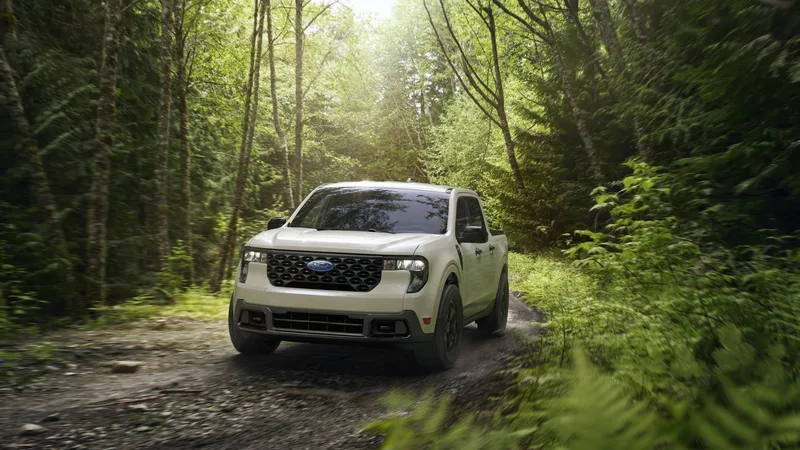
A U-Haul 6×12 cargo trailer weighs more empty than a 5×8 carrying 1,000 pounds. The difference is only 20 pounds, but it tells a renter more than either trailer’s advertised capacity: an upgrade at the counter can eat through the truck’s towing allowance even when the load stays exactly the same.
Put the same 1,000 pounds of furniture, boxes and equipment in each trailer and the gap gets easier to see. The 5×8 comes to 1,900 pounds loaded. The 6×12 comes to 2,920 pounds. For a 2025 Ford Maverick rated to tow 2,000 pounds, the first setup is 100 pounds under that rating on paper. The second is 920 pounds over. The cargo didn’t change. The box around it did.
The larger trailer starts 1,020 pounds heavier
U-Haul lists its enclosed 5×8 cargo trailer at 900 pounds empty, with up to 1,800 pounds of cargo and a 2,700-pound trailer-plus-cargo maximum. The enclosed 6×12 cargo trailer starts at 1,920 pounds empty and is listed for up to 2,480 pounds of cargo and a 4,400-pound trailer-plus-cargo maximum. It also has hydraulic surge brakes. Those figures describe the rental equipment, not what a particular truck is allowed to pull.
At a 2,000-pound loaded-trailer rating, subtracting each empty weight leaves 1,100 pounds of cargo in the 5×8 and only 80 pounds in the 6×12, before any other limit applies. That is why the 6×12 is out for this particular 1,000-pound move even though its catalog cargo rating is higher. The 5×8’s 100 pounds of paper margin can disappear if the cargo was estimated instead of weighed. Moving blankets, ratchet straps, dollies and boxes added late count, too.
The 1,900-pound 5×8 clears the tow-rating comparison, but it misses a separate brake recommendation. The 2025 Maverick owner’s manual recommends functioning trailer brakes above 1,500 pounds loaded. U-Haul identifies its 5×8 cargo trailer as a medium model and says its small and medium trailers do not have brakes. At the catalog empty weight, 600 pounds of cargo brings that trailer to 1,500 pounds exactly; 1,000 pounds puts it 400 pounds above the threshold. That is a reason to split the load or find a compatible braked setup, not to rely on the 100 pounds left under the tow rating. Check the assigned trailer and the brake rules along the route separately.
Which Maverick gets the 4,000-pound rating
Ford’s 2025 Maverick towing chart rates the 2.5-liter hybrid with front-wheel drive at 2,000 pounds of loaded trailer weight. The chart also shows 2,000-pound ratings for all-wheel-drive configurations without the 4K Tow Package. The chart’s 4,000-pound entries are for properly equipped all-wheel-drive 2.5-liter hybrid and 2.0-liter EcoBoost configurations with the 4K Tow Package, option 53Q. A receiver on the bumper is not proof the truck has that package. Check the specific truck’s equipment and rating before doing the math.
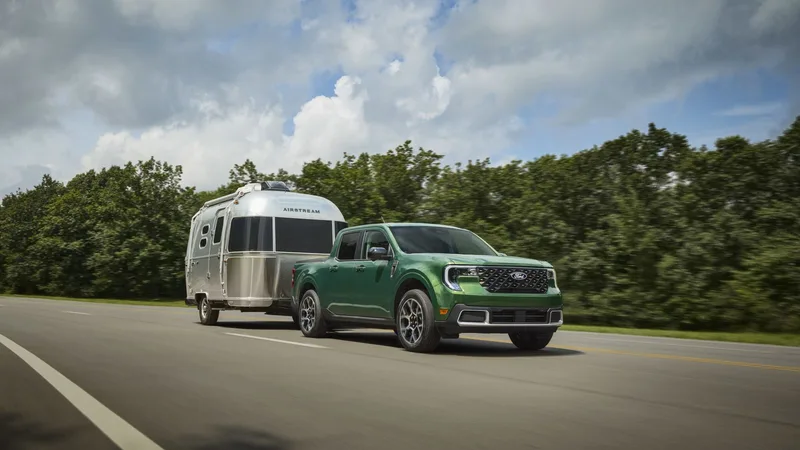
The 2,920-pound example is below Ford’s 4,000-pound rating where that rating applies, but Ford’s rating is one check, not the rental agreement. The same guide lists a maximum trailer frontal-area figure of 29 square feet without 53Q and 40 with it. Ford warns that exceeding the figure can significantly reduce towing performance. The dimensions inside the trailer and the opening of its rear door do not establish its frontal area. Use the actual unit’s exterior information and Ford’s guidance before treating that check as settled.
Both U-Haul model pages list a curb-weight check. The rental company’s general instructions discuss a separate standard for braked trailers, so confirm which limits U-Haul applies to the assigned equipment. Ford separately lists a maximum combined weight for the truck and trailer. A truck can clear one of those checks and still fail another. The reservation and the contract determine what U-Haul will allow for the exact vehicle, hitch and trailer.
A roomier trailer can carry less behind the same vehicle
Take a different example: a combination with a 3,500-pound effective loaded-trailer ceiling. This is a hypothetical limit for the arithmetic, not a Maverick rating or a rental approval. The 5×8’s own listed cargo maximum is 1,800 pounds, so that is the lower number even though subtracting its empty weight from 3,500 gives 2,600. The 6×12 has just 1,580 pounds left after subtracting its empty weight. In that example, the roomier trailer can take 220 pounds less cargo before any further limit reduces either figure.
The bigger trailer earns its place when the load needs the space, not just because it has a larger number on the side. The catalog rear opening on the 5×8 is about 3 feet 11 inches wide by 4 feet 10 inches tall. The 6×12 is about 5 feet 4 inches wide by 5 feet 1 inch tall. A rigid, 50-inch-wide cabinet won’t clear the listed 47-inch opening straight on, even though the 5×8 has 56 inches of interior width. Measure the largest piece in the orientation it will actually go through the door, including legs and hardware, then measure the assigned trailer. U-Haul says dimensions vary by unit.
Three checks before pickup
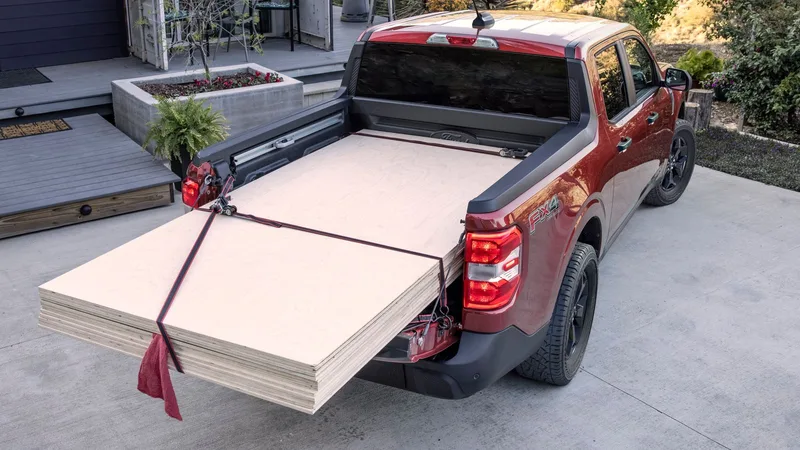
- Weigh the load. Make a list before reserving, including what goes in the truck and what goes in the trailer. If the figures are close, verify the loaded weights at a scale before setting out on the trip. Don’t use the rental’s advertised cargo maximum as a substitute for the actual load.
- Read the truck’s labels and the hitch ratings. Use the driver-door payload sticker and account for the occupants, cargo in the truck, added equipment and the trailer’s actual tongue weight. Check the truck’s gross vehicle, rear-axle and combined weight limits, and stay within the ratings of the receiver, ball mount and ball. Payload left in the cab or bed is not the same as trailer weight left under the tow rating.
- Confirm the combination with U-Haul. Bring the exact model, drivetrain, package and hitch information. Check the contract for any lower weight limit. Follow U-Haul’s loading instructions: put about 60% of the cargo weight in the front half, secure it to the trailer’s tie-downs and stay at or below its recommended maximum of 55 mph, or slower when conditions or posted limits call for it.
Tow Center’s Tow Fit Check can organize the payload, tongue weight and trailer ratings before the reservation. It does not measure the door or the frontal area, or approve a rental. If the load clears the 5×8 door and the combination meets Ford’s guidance, applicable rules and the rental limits, there’s no reason to tow an extra 1,020 pounds of trailer for the same move. If an item needs the bigger door and the 6×12 puts the truck over a limit, change the plan: take another trip with eligible equipment, arrange delivery for the oversized piece, or choose a properly rated tow vehicle or moving truck.