News
The 2027 Ford F-150 can tow up to 13,500 pounds. BlueCruise caps hands-free towing at 10,000
For drivers who tow a camper, eligibility comes down to two factory options, the loaded trailer and how much of the trip runs on compatible highways.
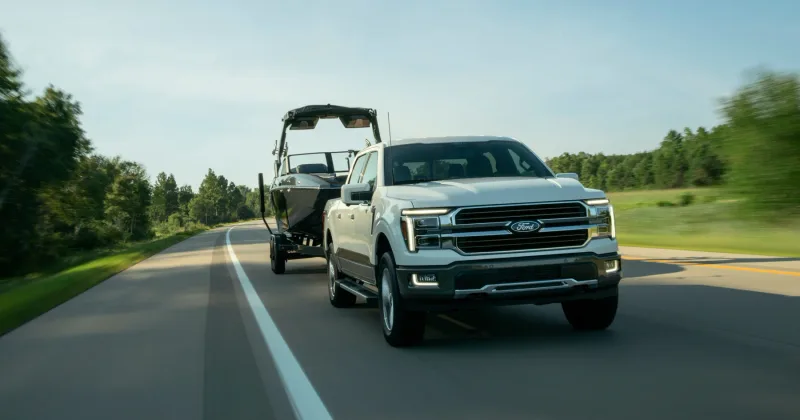
Put a loaded camper weighing 10,500 pounds behind the highest-rated 2027 Ford F-150. The camper comes in 3,000 pounds under the truck’s maximum trailer rating and 500 pounds over the limit for hands-free towing. You can order the right truck, fit the right hitch, keep the entire rig within its weight ratings and still have to steer it yourself on the interstate.
Matt Ihnken gave Ford a pretty good reason to close that gap. Commenting on Jim Farley’s LinkedIn post about BlueCruise, Ihnken said he usually had a trailer behind him on the highway miles where the feature would have worked. That was the reason he gave for passing on the subscription. Ford’s 2027 change brings those trips into play for the first time, depending on what he pulls. Farley’s post and Ihnken’s comment.
Farley said 76% of the F-150 buyers in Ford’s survey used their trucks to tow. Ipsos surveyed U.S. buyers of F-150s with available BlueCruise between October 2024 and September 2025. Ford also reported that U.S. F-150 drivers logged 118 million hands-free miles in 2025, more than drivers of any other BlueCruise-equipped model. Those miles came before Ford introduced hands-free towing. Ford’s description of the survey.
The F-150 behind Ford’s 13,500-pound rating
Ford’s highest conventional tow rating belongs to the four-wheel-drive SuperCrew with the 6.5-foot bed, 3.5-liter EcoBoost V6, Tow/Haul Package and optional Max Tow Axle. Look down the column in the towing guide and you’ll find the 13,500-pound trailer figure alongside a 19,400-pound gross combined weight rating. The latter covers the loaded truck and trailer together. Ford bases the published trailer rating on a properly equipped truck with a 150-pound driver and a 150-pound passenger. The family, gear and accessories you take on a trip can change what your particular truck can pull. Ford’s 2027 F-150 towing guide, page 3.
To reach the 10,000-pound hands-free maximum, Ford calls for the Tow/Haul Package and the optional Max Tow Axle. The truck also needs BlueCruise hardware and an active plan or trial. Where the individual F-150’s trailer rating is lower, that lower number governs. Ford lists the feature on equipped trucks from XLT through Platinum. Paying for a more expensive interior doesn’t buy another pound of hands-free capacity. Ford’s BlueCruise towing announcement.
Crouch behind an F-150 with the Max Tow Axle and there’s a third number on the two-inch receiver. Ford rates the reinforced receiver for up to 14,000 pounds. That stamp covers the hitch component. Ford rates the completed truck separately, with different entries for wheelbase, axle ratio and gross combined weight. A photo of the receiver alone, the kind a seller might send to answer a towing question, tells you little about how much camper that particular truck can pull hands-free.

Pack the camper before you weigh it
An RV’s advertised dry weight leaves the owner’s belongings out of the calculation. Weigh the camper with its usual supplies aboard and check the load it places on the hitch. The F-150 guide bases its conventional trailer table on a tongue load of 10% of the loaded trailer weight. On a 9,000-pound trailer, that works out to 900 pounds at the hitch. The truck has to carry that load along with the people in the cab and the cargo in the bed. Check the measured tongue load and the truck’s payload and rear axle limits before using the trailer rating to pick a truck. Ford’s towing calculator takes the VIN, so you can check a dealer’s actual vehicle. Ford’s towing and payload guidance.
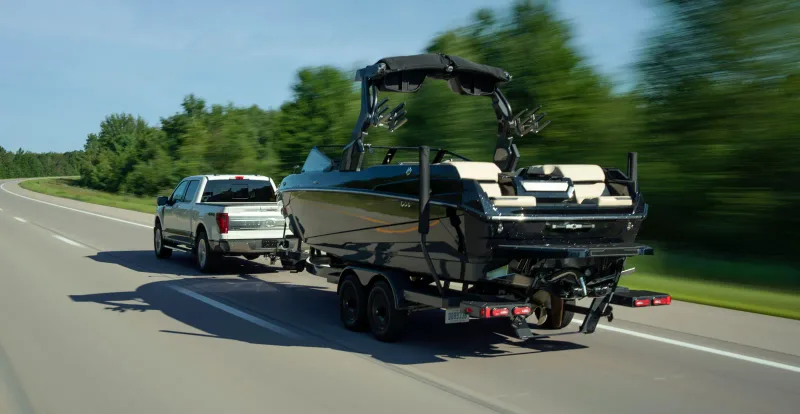
Ford’s driver-assistance chief, Sammy Omari, says the driver also has to create a profile with accurate dimensions for each trailer. A low equipment trailer and a tall camper can weigh the same and catch the wind differently. For the family that takes a boat out one weekend and hauls a camper the next, the setup involves two trailers, two sets of measurements and a check that the right profile is in use. Omari’s description of the trailer profile and operating limits.
The F-150 towing guide gives an example of why the shape of a conventional trailer matters. Ford lists a maximum frontal area of 65 square feet for combinations where the truck has a tow rating of 7,701 pounds or more. It defines that area as the surface the moving truck and trailer expose to the air. That’s worth looking up if you’re replacing an open trailer with an enclosed one. The enclosed trailer can weigh the same on a scale and present a much larger face to a headwind. Ford’s 2027 F-150 towing guide, page 6.

What happens when you catch a slower truck
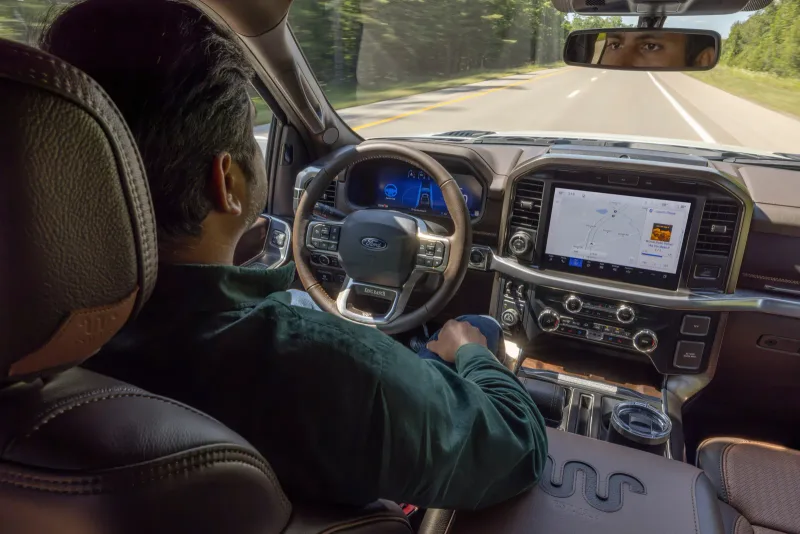
On a qualifying divided highway, BlueCruise can steer, brake and accelerate while the driver watches the road. Catch a truck running a few miles an hour slower and the pass is yours. Ford disables hands-free lane changes while towing. It also turns off In-Lane Repositioning, the function that can ease a vehicle away from traffic alongside it while staying within the lane. A driver familiar with that extra room when a tractor-trailer pulls alongside an unhitched truck loses that particular assistance with the trailer attached.
When BlueCruise detects a construction zone, it prompts the driver to take the wheel. If it detects persistent trailer sway, it can slow the truck, limit its speed or return steering to the driver. An active tire-pressure warning also takes hands-free towing out of service. Ford set a 75-mph software ceiling for towing, five mph below the limit it specifies for BlueCruise without a trailer. The posted towing limit, trailer tires and conditions on the road can require a lower speed. Ford’s explanation of how the towing system behaves.
Check the route you already tow
Trace the route from home to your usual campground on Ford’s map. If the middle 200 miles of a 250-mile trip follow a designated interstate, that’s the stretch where hands-free assistance could earn its keep. Lane markings still have to be visible, and weather or construction can interrupt assistance along the way. If the drive to your boat ramp runs almost entirely on two-lane roads, a map showing extensive coverage elsewhere in the state does little for that trip. Ford’s coverage map and operating conditions.
Ford says current subscribers with eligible 2027 trucks get towing access at no extra charge. In November 2026, Ford listed its U.S. plans at $49.99 a month or $495 a year. Four paid months for the summer camping season add up to $199.96 before tax. Ten monthly payments total $499.90, just $4.90 more than the annual price. A year-round highway commuter and a driver who tows only from Memorial Day to Labor Day have different reasons to choose a plan. For Ihnken’s use case, the deciding miles are the ones he drives with the trailer attached. Ford’s plan pricing and 2027 equipment details.