News
Chevy’s 5.7-liter V8 can tow 3,800 pounds more than the 6.6 in a 2027 Silverado 1500 4WD crew cab
The 2027 Silverado’s 6.6-liter V8 has 79 more horsepower than the 5.7. For someone shopping with a 10,000-pound trailer, the smaller V8 is the one worth a closer look.

Show up at a Chevrolet dealer with a camper that weighs 10,000 pounds loaded, ask for the biggest V8 in a 2027 Silverado 1500, and the engine you get is 300 pounds short on tow rating. Chevrolet puts the 6.6-liter V8’s maximum at 9,700 pounds. A 5.7-liter V8 with the Max Trailering Package can pull up to 13,500 pounds in a four-wheel-drive Crew Cab. You can keep the full back seat and four-wheel drive and gain 3,800 pounds of rated trailer capacity with the smaller engine.
The bigger V8 produces 481 horsepower and 501 pound-feet of torque. The 5.7 makes 402 horsepower and 428 pound-feet. That gives the 6.6 an extra 79 horsepower and 73 pound-feet, figures that help explain why a shopper with a heavy camper would ask about it first. Chevrolet’s specifications put the horsepower, torque and tow rating on the same line. The little superscripts beside the tow ratings are where the two trucks start to look very different. Chevrolet’s 2027 Silverado specifications and trailering tables.
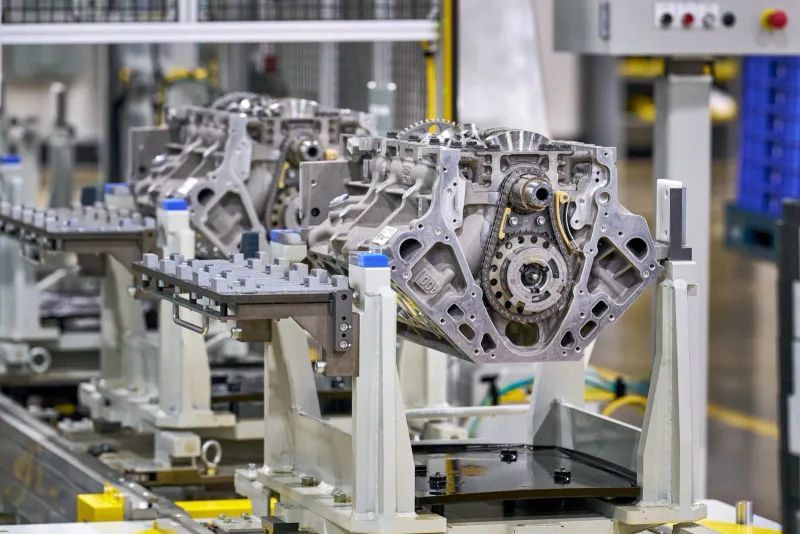
The Silverado that earns the 13,700-pound rating
Chevy advertises a maximum of 13,700 pounds for the 5.7. To get that figure you need a two-wheel-drive Double Cab with the standard bed and Max Trailering Package. The 6.6’s published maximum belongs to a four-wheel-drive Crew Cab with a short or standard bed. Compare the engine maximums and you get a 4,000-pound gap. For someone who needs a full back seat and four driven wheels, one of those trucks is already off the shopping list.
Follow the 5.7 across the detailed chart to the Crew Cab column. With four-wheel drive and Max Trailering, Chevrolet gives it the 13,500-pound rating. You give up 200 pounds of trailer rating compared with the two-wheel-drive Double Cab. That’s a small price in towing capacity for someone who wants the kids in the back and four-wheel drive at the boat ramp. The option to look for on the equipment list is Max Trailering.
At the other end of the 5.7 table, Chevrolet rates a two-wheel-drive Regular Cab at 8,800 pounds. That leaves it 1,200 pounds short of the same 10,000-pound camper. A dealer searching inventory for a Silverado with the 5.7 could find that truck or the 13,500-pound Crew Cab. Both descriptions would be accurate. A photograph of the stock vehicle’s window sticker lets you check the cab, drive type and towing equipment before you drive across town.
What Chevrolet measures beyond engine output
The two engines come from GM’s sixth-generation Small Block family. At GM’s Flint engine plant, photographer Steve Fecht caught a worker fastening a high-pressure fuel line to a V8. The facility assembles both engines. GM added six millimeters of piston stroke to the preceding 5.3- and 6.2-liter designs to arrive at 5.7 and 6.6 liters. Both replacements use direct and port fuel injection. For an owner trading an older 5.3-liter Silverado, the smaller of the new V8s is itself a step up in displacement. GM’s engineering account and Fecht’s photo record.
The engine dyno measures what the V8 produces. The truck also has to climb under load, handle a curve, bring the rig to a stop and shed heat. Chevrolet’s trailering guide says its engineers test acceleration, braking, handling, heat management and structural performance when they set a rating for the combination. Its Silverado tables identify which configurations qualify. They give no breakdown that would let a buyer assign those 3,800 pounds to a particular axle, a cooling component or an engine part. Chevrolet’s explanation of how it determines trailer ratings.
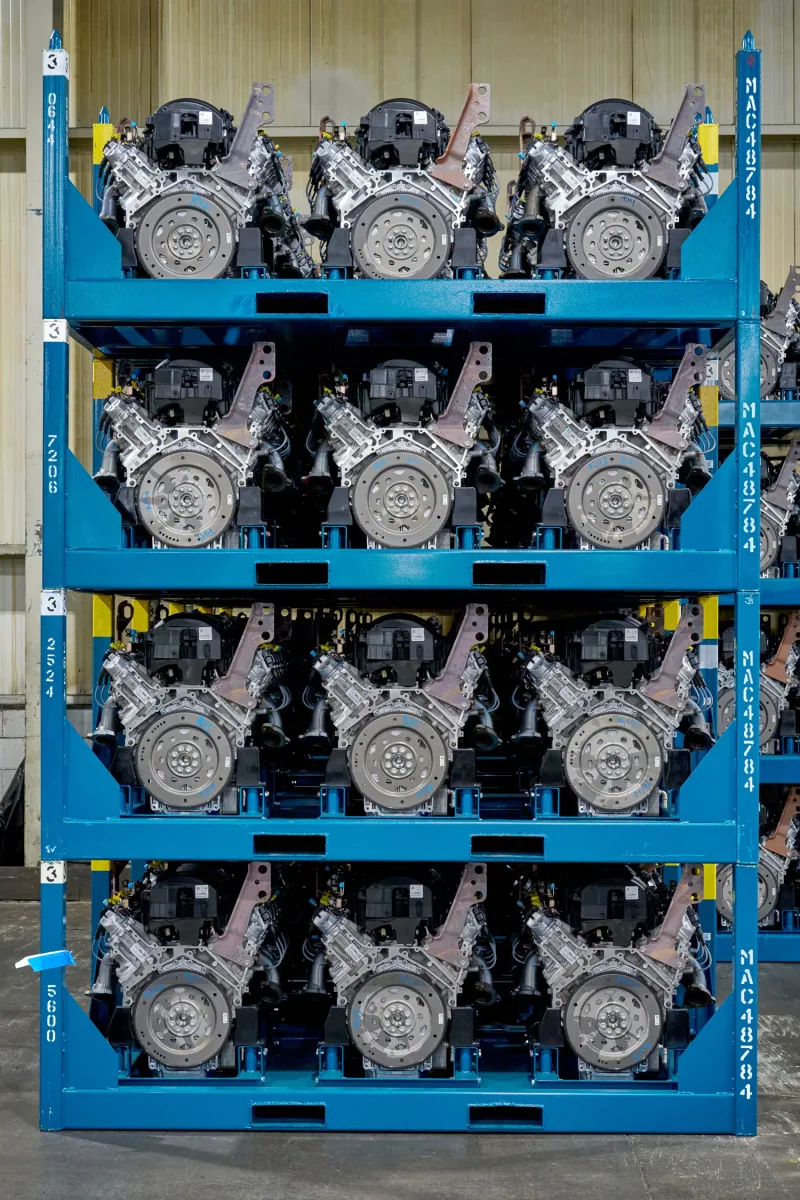
There’s another comparison in that same table for a buyer considering the 3.0-liter Duramax diesel. Chevrolet rates it at 495 pound-feet, six fewer than the 6.6-liter gasoline V8. With the short bed, four-wheel-drive Crew Cab and Max Trailering Package, the diesel’s tow rating is 12,000 pounds. That gives the family with the 10,000-pound camper a second engine to price against the 5.7. Either of those configurations clears the trailer-weight figure on paper. How much room remains for the family inside the truck is a separate calculation. Chevrolet’s 2027 Silverado trailering figures.
A camper uses payload before anyone climbs aboard
Take a 10,000-pound conventional camper with a measured 1,200 pounds on the hitch. On a truck whose payload label reads 1,800 pounds, that leaves 600 pounds for people, cargo and other equipment counted against payload. Put 450 pounds of people in the cab and there are 150 pounds left for the bed and the rest of the rigging. A set of bikes and a load of firewood can use that up. These are example loads. On a dealer truck, the tongue and rear axle ratings inside the door set additional limits.
Chevrolet’s summary table lists a maximum payload of 2,170 pounds beside maximum towing of 13,700 pounds for the 5.7. The footnotes lead to two different vehicles. The payload figure belongs to a long-bed, two-wheel-drive Regular Cab. The tow rating belongs to the standard-bed, two-wheel-drive Double Cab. For the Crew Cab sitting on the lot, open the driver’s door. Its Trailering Information Label can show curb weight, maximum tongue weight, maximum payload and the rear axle rating for that vehicle. Chevrolet’s guide to the doorjamb label.
Read the two weights on the scale ticket
With a camper hitched, CAT Scale directs the truck’s front wheels onto its first platform, the rear wheels onto the second and the trailer axles onto the third. The ticket shows how much the trailer axles carry as well as what the entire combination weighs. Some of the camper’s weight is pressing down through the hitch. If you use the trailer-axle line to shop for the next Silverado, you leave out the portion the truck is carrying. CAT Scale’s truck-and-trailer diagrams.
Weigh the truck again on its own with the same people, cargo and equipment aboard. Subtract that reading from the combined weight on the first ticket. For example, a truck and camper that weigh 16,250 pounds together, with a truck that weighs 6,250 pounds alone, give you a 10,000-pound loaded camper. The subtraction captures the trailer’s whole weight regardless of how much of it rested on the hitch during the first pass. Family RV Association’s guide to weighing a loaded rig.
For that camper, the scale tickets rule out the 6.6-liter Silverado 1500 before anyone starts discussing trim or horsepower. The four-wheel-drive 5.7-liter Crew Cab with Max Trailering stays on the list. Match its doorjamb label and window sticker to the same VIN and compare its remaining payload with the people and gear you carry. That’s the truck Chevrolet gives a 13,500-pound tow rating, and now you have the numbers for the camper you intend to put behind it.